

by LaQuan Henley
Real Estate Broker
December 9, 2025
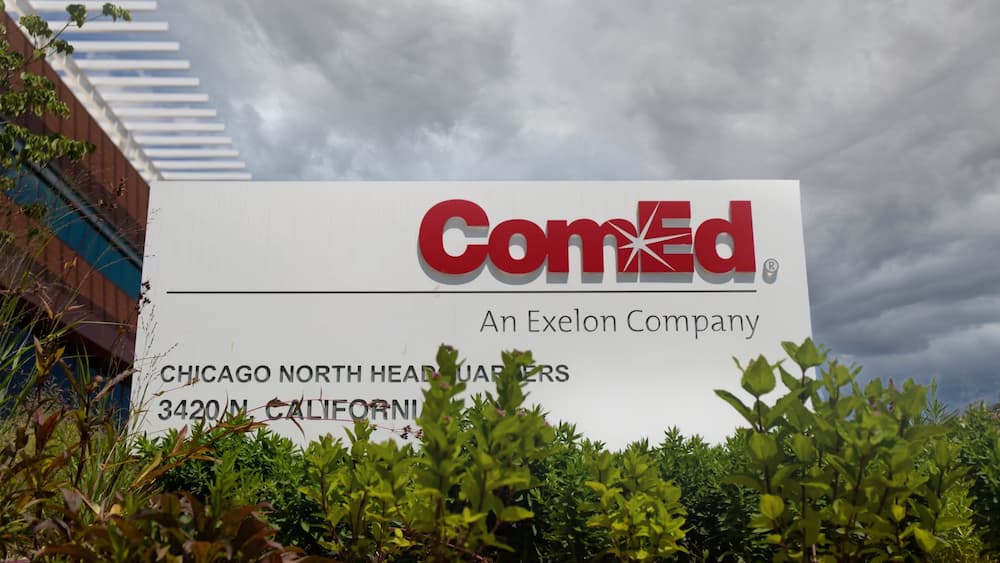
Electricity costs have become one of the most influential line items in Chicago real estate underwriting. From high-rise multifamily operators managing common-area loads to industrial developers powering warehouse automation, the region’s energy ecosystem is no longer a background utility — it’s a major economic determinant. ComEd’s newly announced $803 million in state-mandated nuclear energy credits, paired with its request for a $268.5 million reconciliation rate increase, illustrates this tension in stark relief.
At the center of the issue: Chicago property owners may see modest bill relief in early 2026, only to face rising delivery charges soon after. The contradiction is pushing investors, developers, and operators to reassess operating assumptions as the cost of power becomes both more volatile and more central to asset performance.

A Summer of Surging Prices and a Utility Under Pressure
Chicago residents and businesses entered the fall after one of the most expensive electricity summers in recent memory. Record heat and soaring wholesale power prices — driven in part by growing demand from power-intensive data centers — led many customers to experience triple-digit increases in their June electric bills.
For commercial real estate operators, the spike was even more acute. Industrial facilities with extensive cooling loads, senior housing with heightened climate resilators, and multifamily properties forced to absorb common-area increases all experienced cost pressures that eroded margins.
This is the backdrop against which ComEd now offers a financial reprieve: $803 million in “carbon mitigation credits,” a feature of the state’s Climate and Equitable Jobs Act (CEJA). These credits allow nuclear plants, operated by Constellation, to return value to customers when wholesale prices exceed specific thresholds.

The average Chicago household will see roughly $13 per month in credits from January through May 2026 — small but meaningful relief in a volatile pricing environment.
But the story doesn’t end there.
The $268 Million Question: A Rate Hike That Could Offset the Relief
ComEd is simultaneously petitioning the Illinois Commerce Commission (ICC) to approve a $268.5 million reconciliation adjustment for 2024 capital expenses that exceeded projections. If granted, the adjustment would raise the average residential bill by about $3.41 per month in 2026, and commercial customers — depending on load profile — may see materially higher impacts.
For real estate professionals, this matters for three reasons:
1. Delivery charges are half the electric bill.
Unlike supply rates, which fluctuate with market conditions, delivery charges are relatively fixed and unavoidable. A hike affects buildings regardless of consumption reductions, efficiency upgrades, or supply-side procurement strategies.

2. ComEd already received a $606 million, four-year rate increase in 2023.
That previous adjustment is still phasing in and will raise customer bills each year through 2027. Layering an additional reconciliation hike complicates cost forecasting for owners and investors.
3. Uncertainty undermines underwriting.
Multifamily investors, warehouse developers, and institutional landlords rely on predictable utility charges when planning acquisitions or stabilizing assets. Cost volatility can shift cap rates, accelerate repositioning decisions, or reduce net operating income (NOI).
For Chicago’s real estate market — which already navigates rising insurance premiums, elevated interest rates, and ongoing property tax variability — energy instability adds yet another structural cost pressure.
The Billing System Controversy: Consumer Groups Push Back
One element of the requested increase has drawn particular scrutiny: ComEd is seeking $48 million to recover the costs of a failed billing system rollout that left millions of customers unable to pay bills or view balances in early 2024. Solar customers waited months for renewable energy credits they were owed.
The Citizens Utility Board (CUB), one of Illinois’ most vocal consumer watchdogs, argues that customers shouldn’t foot the bill for a corporate misstep.

Administrative law judges have already recommended trimming $16.4 million from ComEd’s request, but consumer advocates are pressing for deeper cuts. Their position is simple: operational mistakes — especially those that inconvenience or financially burden customers — should not be passed along as ratepayer obligations.
For Chicago commercial landlords and property managers, the billing platform’s ongoing issues also complicate tenant utility pass-throughs, reimbursement schedules, and solar REC accounting. Incomplete or inaccurate billing can disrupt pro forma assumptions and create operational friction.
Data Centers, Demand Growth, and the Cost of Electrification
One of the most significant pressures shaping Chicago’s future energy rates has little to do with billing systems or reconciliation budgets: accelerating demand from data centers.
Northern Illinois has become one of the Midwest’s dominant data center clusters, thanks to strong fiber connectivity, available land, and competitive economic incentives. But these facilities require enormous power loads — and capacity auctions reflect that demand.
PJM Interconnection, the regional grid operator, saw its reserve electricity auction price jump 22% this year to a record $329.17 per megawatt-day for the 2026–27 delivery year.

What this signals:
• Higher long-term supply prices
• Increased grid investment costs
• More volatile electricity markets
• Potential for infrastructure-driven development bottlenecks
Industrial developers in Chicago’s I-55 and I-80 corridors, multifamily developers planning large-scale electrification, and downtown operators with aging infrastructure will all need to assess their exposure to rising capacity costs.
Relief for Low-Income Customers — and the Structural Challenge It Reveals
ComEd’s new low-income discount program — aimed at capping energy costs at 3% to 6% of household income — addresses a genuine affordability issue in Chicago. Energy burden is disproportionately high in older multifamily buildings, particularly on the South and West Sides, where aging electrification, inefficient systems, and poor insulation drive monthly bills higher than the city’s median.
However, CUB points out a deeper issue: if utility expenses continue climbing, more households will enter these hardship categories. For developers and owners investing in LIHTC, mixed-income, or affordable housing projects, program parameters may influence how utility allowances are calculated and how financing models need to adapt.

Implications for Chicago’s Real Estate Stakeholders
For Multifamily Operators
Expect rising delivery charges to compress margins, especially in buildings where ownership bears common-area electric costs. Budget conservatively for 2026 and consider accelerated energy-efficiency investments.
For Commercial Landlords
Prepare for potential tenant pushback or renegotiation as NNN pass-throughs increase. Transparent communication and proactive planning will be essential.
For Developers
Model higher electricity costs when underwriting new projects, particularly for electrification-forward developments. Demand-side management and on-site renewables may shift from “value-add features” to necessities.

For Institutional Investors
Energy volatility is now a core risk variable in the Midwest. Ratings, insurance, and financing analyses increasingly consider grid stability exposure.
For Policy Stakeholders and Municipal Leaders
Chicago’s development competitiveness is partially tied to infrastructure affordability. Collaboration with ComEd and state agencies will be necessary to maintain economic momentum.
What Comes Next
The Illinois Commerce Commission is expected to rule on ComEd’s reconciliation request by December 20. For now, Chicago property owners should view energy planning as part of strategic asset management rather than an afterthought.
If approved, the rate hike will arrive just as energy credits begin appearing — offering a brief period of relief before structural costs reassert themselves. This duality reflects a broader trend shaping the Chicago market: energy economics are no longer peripheral. They are part of the capital stack, the operations strategy, and the long-term viability of every asset class in the region.